För att ge en bra upplevelse använder vi teknik som cookies för att lagra och/eller komma åt enhetsinformation. När du samtycker till dessa tekniker kan vi behandla data som surfbeteende eller unika ID:n på denna webbplats. Om du inte samtycker eller om du återkallar ditt samtycke kan detta påverka vissa funktioner negativt.
Den tekniska lagringen eller åtkomsten är absolut nödvändig för det legitima syftet att möjliggöra användningen av en specifik tjänst som uttryckligen begärts av abonnenten eller användaren, eller för det enda syftet att utföra överföring av en kommunikation över ett elektroniskt kommunikationsnät.
Den tekniska lagringen eller åtkomsten är nödvändig för det legitima syftet att lagra inställningar som inte efterfrågas av abonnenten eller användaren.
Den tekniska lagringen eller åtkomsten som används uteslutande för statistiska ändamål.
Den tekniska lagringen eller åtkomsten som används uteslutande för anonyma statistiska ändamål. Utan en stämningsansökan, frivillig efterlevnad från din Internetleverantörs sida, eller ytterligare register från en tredje part, kan information som lagras eller hämtas endast för detta ändamål vanligtvis inte användas för att identifiera dig.
Den tekniska lagringen eller åtkomsten krävs för att skapa användarprofiler för att skicka reklam, eller för att spåra användaren på en webbplats eller över flera webbplatser för liknande marknadsföringsändamål.






Hello, I’m very fascinated with the concept of pulse jets. I’m a novice but I have some ideas. You seem to be the foremost authority on them today.
To solve the problem of vibration and to create a steady, more powerful, ”non-pulse” thrust exhaust, what about combining 2 pulse jet engines integrated to a single exhaust tube. Likewise, the valve assembly for each engine should be linked and synchronized to each other, but ”opposite” each other. In effect, when the valves for engine 1 are open, the valves on engine 2 should be closed. Subsequently when engine 1 is firing, engine 2 is ”in-taking” and exhausting. In theory this should create a continuous, consistent, steady ”non-pulse” thrust at the exhaust end of the combined engines, similar to a fan jet or ram jet with the extra bonus of more thrust!
What are your thoughts?
I just thought the idea was ”cool”…..
Hi Mr Oliver
To be honest, I have personally not done any research on that arrangement. It would surprise me though if Lars-Erik or Jim have not.
I have seen many engines with one inlet and two exhausts. These run in sync with each other. About your idea, Spontaneously I think that it would not work since the engine actually is ”inhaling” and exhausting at the same time.
Many people have actually had a lot of trouble getting two engines running next to each other because the pressure waves from one will bring the other one out of ”balance”. The solution is often to put a connection tube between them (close to the combustion chamber) to synchronize the pulses.
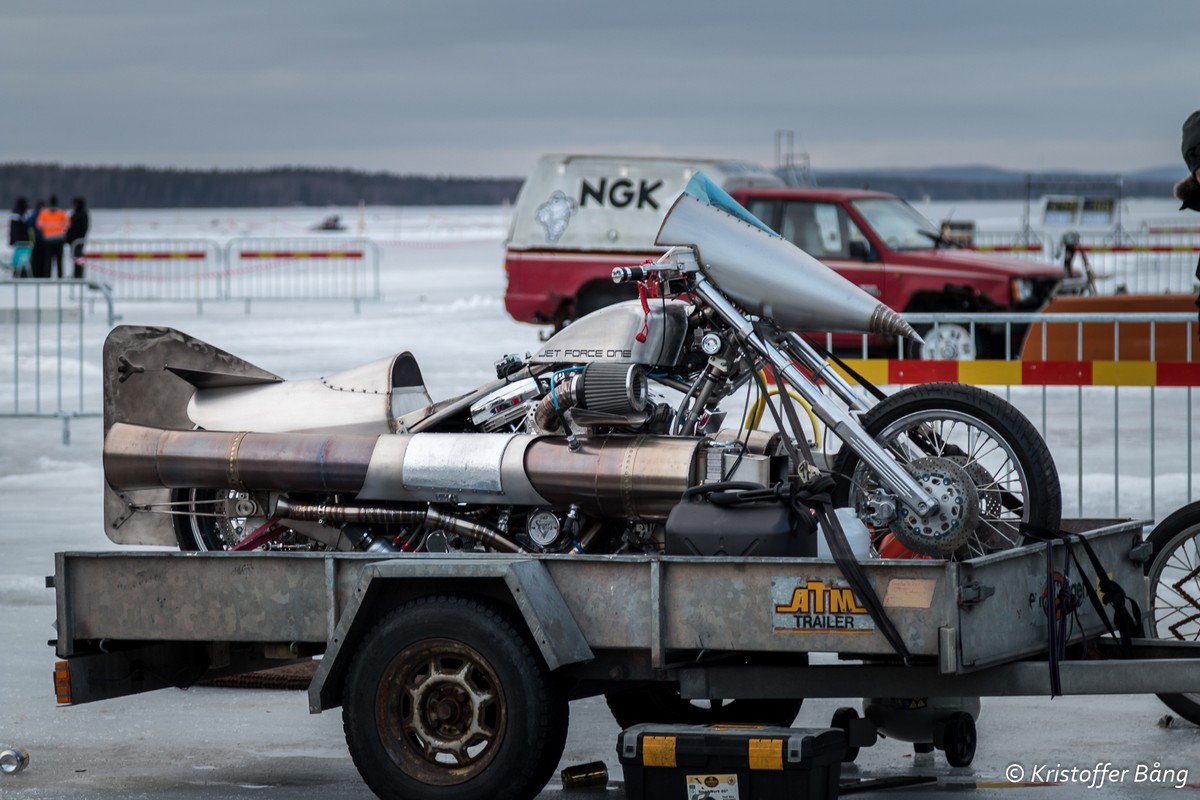
Our friend Peter Forsberg had that problem on his twin pulsejet motorcycle. He solved it by putting a ”fin” between the two exhausts.
Disclaimer: My spontaneous thoughts might be incorrect after a hard day’s work.
The idea is interesting at first thought but it wouldn´t work since the engine needs the returning flame front to ignite the following pulse.
Imagine the pulsejet workings being a hanging weight suspended by a coil spring, the weight bouncing up and down is the flame front inside the jet pipe. If you try to remove the inhaling part of the pulse it would be like cutting off the spring so the weight falls to the floor.